

Research
The research projects presented here translate the principles of Botanical Simulation Science into concrete investigative structures.
The projects defines a specific system, environment, or process in which plant behavior can be observed, modeled, and understood across multiple layers of interaction.
Together, they outline a growing field of exploration - where biological, computational, and environmental dynamics converge into new forms of research.
Core Research Projects

PhytoScope
Advanced Phytochrome and Bioelectricity Studies
PhytoScope investigates how light-sensing mechanisms interact with bioelectric signaling in plants. The project focuses on understanding how spectral input becomes systemic coordination - linking perception, electrical state changes, and adaptive response.
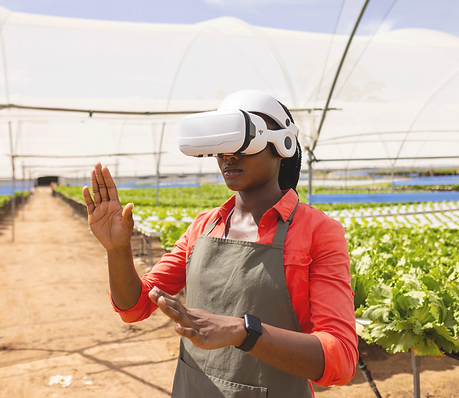
PhytoVerse develops simulation environments that model plant systems across space and time. The aim is to create a research-grade framework for exploring growth, signaling, and adaptation as dynamic processes - allowing plant behavior to be studied as an evolving system rather than a static snapshot.
PhytoVerse
Development of 4D Simulation Environments

PhytoConnect
Bioelectric Sensors and Interfaces
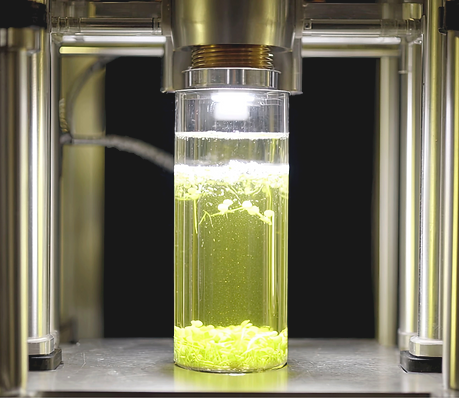
PhytoConnect designs sensor and interface approaches for capturing plant bioelectric activity and translating it into readable signals. The project targets measurement, interpretation, and interface logic - building the technical bridge between plant signaling and external analytic or interactive systems.
PhytoMind
Artificial Intelligence and Machine Learning
PhytoMind applies AI methods to plant-related datasets to detect patterns, correlations, and predictive structures. The project focuses on turning complex biological signal streams into interpretable models - supporting simulation, classification, and system-level understanding of plant behavior.

QuantumPhyto
Quantum Biology Experiments
QuantumPhyto explores quantum-relevant mechanisms in plant processes, especially where classical models struggle to explain efficiency or coordination. The project is oriented toward identifying measurable phenomena and developing experimental designs that can test quantum-inspired hypotheses in plant systems.
PhytoVision
Multispectral and Hyperspectral Imaging
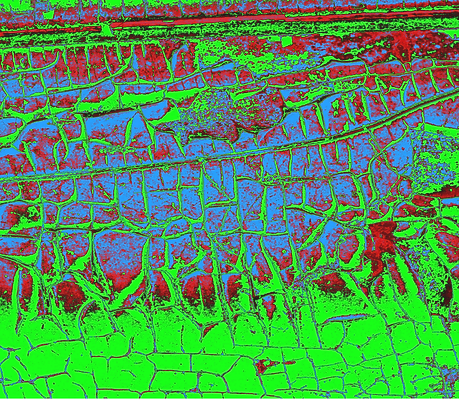
PhytoVision focuses on multispectral/hyperspectral imaging as a way to read plant state, stress, and dynamics beyond the visible spectrum.
The goal is to build a structured imaging approach that supports system analysis, early detection, and high-resolution interpretation of plant processes.

PhytoIntegrate
Interdisciplinary Data Integration
PhytoIntegrate builds a unified structure for integrating plant-related data across disciplines - genomics, physiology, ecology, and environmental inputs.
The project aims to connect datasets into coherent analytic layers to support cross-scale modeling and systems-level insight.

PhytoPsyche
Studies on Psychotropic Substances in Plants
PhytoPsyche investigates psychoactive plant compounds as a scientific entry point into plant–human perception interfaces. The project frames these substances not as cultural artifacts, but as biochemical mechanisms that may inform models of perception, signal translation, and altered cognitive states.
Framework and Gouvernance

PhytoEthics
Ethical and Philosophical Reflection
PhytoEthics develops an ethical framework for research and application in Botanical Simulation Science. It addresses questions of interpretation, attribution of agency, responsible experimentation, and how speculative models can remain scientifically disciplined while still expanding conceptual boundaries.

PhytoNet
Global Collaboration Networks
PhytoNet establishes the infrastructure for international collaboration:
shared protocols, research exchange, and coordinated development across disciplines. The project focuses on creating a living network around Botanical Simulation Science - supporting open research pathways, partnerships, and distributed contribution.